What We Will Cover
- What neurodivergence means
- How neurodivergent traits can influence progress on the Roczen programme
- Common challenges and unique strengths
- Practical adaptations and ways to personalise support
What Is Neurodivergence?
Neurodiversity describes the natural spectrum of differences in how people think, learn, and process information. Neurodivergence more specifically includes conditions such as ADHD, autism, dyslexia and dyspraxia, among others. Being neurodiverse is not a disorder to be “fixed” but a variation of human experience.
Everyone’s brain works differently and those differences can influence areas like attention, planning, motivation, sensory processing and emotional regulation. Understanding these patterns can help you recognise why certain habits or structures feel easier or harder and find ways to make progress that suit you.
How Neurodivergence Can Influence Progress
Some neurodivergent individuals may find aspects of the Roczen programme particularly supportive such as the clear structure and step-by-step approach. Others may find certain elements more challenging to navigate, including:
- Strict planning and organisation: Following structured plans or routines can feel demanding or restrictive which may increase anxiety levels.
- Attention and motivation: Fluctuating focus or energy can make consistency harder.
- Sensory experiences: Textures, tastes or environments may feel overwhelming, affecting meals or movement choices. This can make meal adaptations a necessity to accommodate for an individual's preferences.
- Emotional regulation: Stress, frustration or overstimulation can impact decision-making or self-reflection.
- Communication: It may be harder to ask for help, clarify instructions, or share how things are going. Taking advantage of our infographics shared in groups or written reminders can make it easier to follow guidance and feel supported throughout.
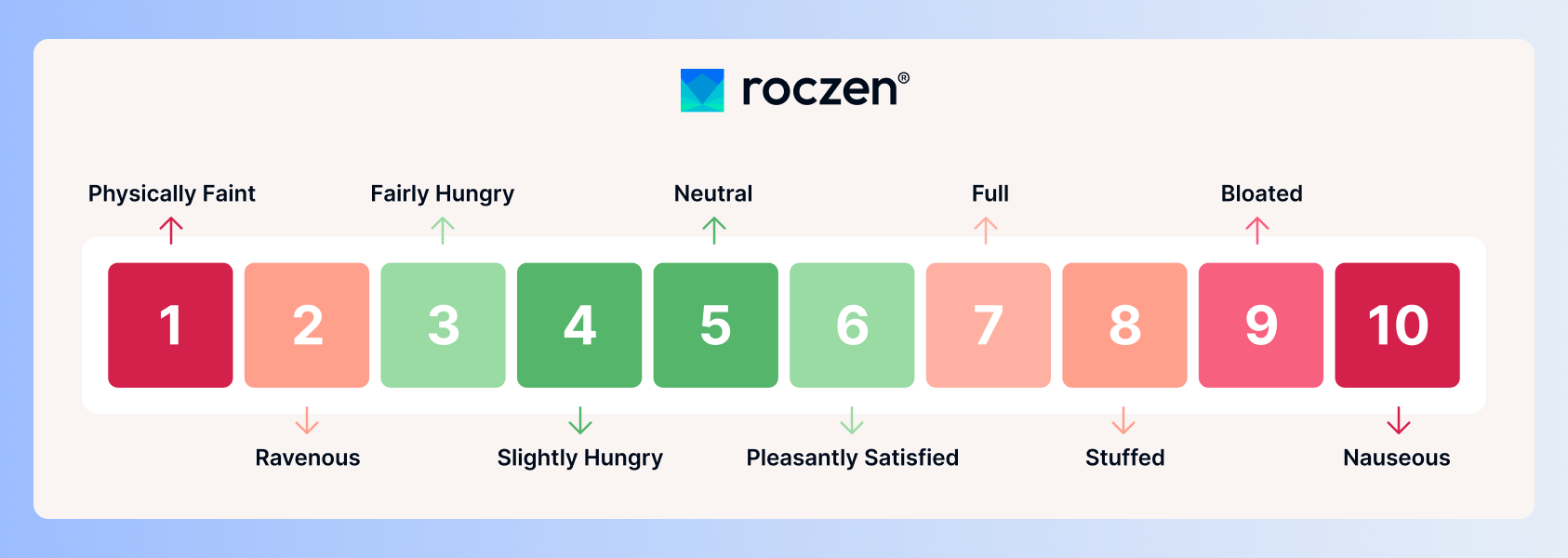
- Recognising hunger signals: Understanding urge surfing, the hunger scale and eating patterns can be very helpful. This can be a challenge initially when eating habits change. Below is our hunger scale, a useful tool in managing physical feelings around food.
This list of challenges do not reflect a lack of ability or effort. They highlight the importance of adapting rather than forcing a one-size-fits-all method to provide extra support. At Roczen we believe that everyone can make sustainable, healthy lifestyle choices with the support of our flexible and effective programs.
Recognising Strengths
Neurodivergence also brings many strengths that can support meaningful progress:
- Creativity: Finding unique ways to problem-solve and adapt routines.
- Hyperfocus: Strong engagement in topics or activities of interest.
- Pattern recognition: Spotting trends in habits, triggers, or progress data.
- Persistence: Continuing to work towards goals even when facing barriers.
By building on these strengths, behaviour change can feel more natural and rewarding. They also serve as a reminder that there’s no single path forward and to recognise that everyone’s way of thinking can bring powerful tools for progress. By embracing what makes you unique, healthy changes can feel more enjoyable, personal and sustainable.
Adapting the Roczen Approach
The Roczen programme is flexible and can be adjusted to work with your preferences and needs. Consider the following ideas:
- Simplify tracking: Focus on one or two key habits rather than recording everything.
- Create flexible routines: Keep a sense of structure, but allow variation from day to day.
- Use sensory friendly strategies: Choose environments and foods that feel comfortable and reduce overstimulation using the relevant food list.
- Add supportive prompts: Set reminders, use visual cues, or add frequent small incentives to encourage consistency.
- Break tasks into smaller steps: Short, manageable actions can help to maintain momentum.
These small changes can make it easier to stay engaged and experience steady progress. Two of the main aims are to reduce the likelihood of feeling overwhelmed or without direction, your lifestyle changes should be tailored to your real life instead of being unhelpful.
Support from the Roczen Team
If you identify as neurodivergent, please share this with your clinician or mentor. This helps us tailor our support to your needs whether that means adjusting communication styles, tracking tools or goal-setting approaches.
Roczen is about helping you take charge of your health and build sustainable habits around nutrition, movement, sleep and stress management. There’s no single path to success, and progress looks different for everyone so be kind to yourself along the way.
Summary
Understanding how neurodivergence shapes your experience can make behaviour change more achievable and compassionate. By recognising both challenges and strengths, adapting tools, and working with us we can build a plan that fits your unique way of living.
If you’re finding certain parts of the programme difficult to manage then reach out to your mentor or clinician and together, we can make the journey work for you.
The information on this page is for educational purposes only and is not a substitute for professional medical advice, diagnosis, or treatment. Always consult a qualified healthcare professional for personalised medical guidance.
References
- The National Autistic Society. Autism and neurodiversity [Internet]. The National Autistic Society. 2025 [Oct 24 Accessed 2025]. Available from: https://www.autism.org.uk/advice-and-guidance/topics/identity/autism-and-neurodiversity
- ADHD UK. About ADHD [Internet]. ADHD UK. [Accessed 15 Jul 2026]. Available from: https://adhduk.co.uk/about-adhd/
- National Institute for Health and Care Excellence. Attention deficit hyperactivity disorder: diagnosis and management (NG87) [Internet]. NICE. 2019 [Accessed 15 Jul 2026]. Available from: https://www.nice.org.uk/guidance/ng87
- ND Connection. ND affirming language guide [Internet]. ND Connection. 2025 [Accessed Oct 24 2025]. Available from: https://ndconnection.co.uk/resources/p/nd-affirming-language-guide


