What we’ll cover:
- Why your measurements may change daily
- How daily fluctuations may impact motivation
- Working with fluctuations
It’s normal for your weight and waist circumference to go up and down from day to day. Many people feel worried when their measurements change, especially if they are trying to lose weight. Understanding why this happens can help you stay confident and keep on with healthy habits without unnecessary stress.
Why your weight and measurements can change daily
Your body is always adjusting. Small changes in weight or waist circumference usually aren’t about gaining or losing fat. They often reflect normal shifts in fluids, digestion, and other daily factors. Some of the most common reasons include:
- Food and drink in your body: Everything you eat or drink adds weight until it’s digested or passed out. A large meal, lots of fluids or alcohol can temporarily increase your weight and also make your waist feel or measure larger.
- Salt and carbohydrates: Foods such as rice, bread, noodles, beans, potatoes can have a similar effect as your body converts carbohydrates to glycogen and stores these in the body alongside water. Excess salted snacks may make your body hold on to water for a period of time. Some studies have shown that excess salt can impact water retention as your body dilutes the salt.
- Hydration: Drinking more water, tea, or coffee can increase weight temporarily. On the other hand, not drinking enough can cause small drops in weight.
- Digestion: A full stomach or bowel can add weight until your body processes food. Bloating can also temporarily increase your waist circumference.
- Exercise: Intense workouts can cause muscles to retain water while they repair, which is normal and temporary.
- Stress and sleep: Stress hormones and poor sleep can affect water balance, appetite, and digestion, leading to small fluctuations.
- Hormones and cycles: People who menstruate may notice fluid retention and weight changes with water retention typically peaking in the luteal phase.
- Medication: Certain medications, including GLP-1 receptor agonists, may also influence daily fluctuations via fluid retention.
When measuring your waist, small differences can also happen depending on the time of day, whether you have eaten recently, and exactly where and how the tape measure is positioned. This is why it is helpful to measure under certain conditions each time.
How daily fluctuations can impact motivation
Changes in weight and waist circumference are completely normal but checking measurements too often can feel discouraging, especially when the numbers shift. A sudden increase in weight is almost always due to water, food, or what is in the digestive system rather than body fat. Similarly, a small change in waist circumference does not necessarily mean that you have gained or lost body fat.
For those taking GLP 1 medications, appetite suppression and slower digestion can also influence daily readings, which means some days you may notice smaller or larger fluctuations than others.
It is important to remember that GLP 1 medications support long term weight loss, and short term changes in your measurements do not mean your treatment is failing. Your clinician can help adjust your plan if needed.
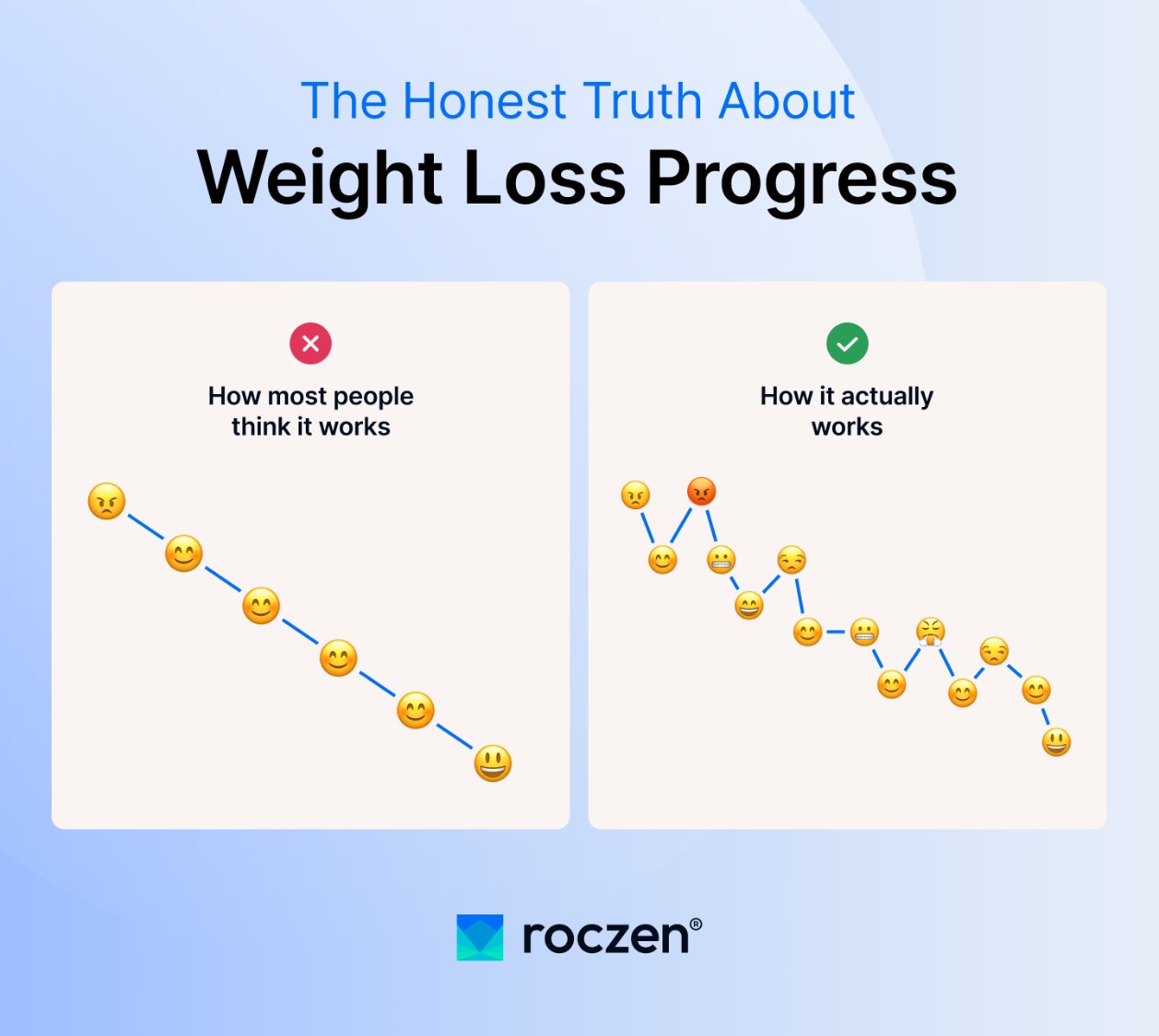
These shifts can sometimes make you doubt your progress, affect how you feel emotionally, and make it harder to stay consistent with healthy habits. That is why our guidance suggests weighing and measuring yourself at certain times, but not too frequently.
At Roczen we ask for regular measurements so we can build an accurate picture of your long term weight pattern and help protect you from the unhelpful feelings and behaviours that can come from checking too often.
Working with fluctuations
Focusing on long term weight goals is a marathon, instead of a sprint. With this in mind, it’s also important to remember that weight management is not always linear, and neither weight nor waist circumference will necessarily change in a perfectly steady pattern.
Some of the practical tips below can support you in understanding measurements and trends:
- On weigh-in and measurement days, do this at the same time of day, ideally in the morning after using the bathroom and before breaking your fast or drinking for more accurate readings.
- Avoid weighing and measuring every day if possible. Weekly or fortnightly weigh-ins including waist circumference paints a clearer picture of change.
- Focus on the trend over time, not single numbers. Small ups and downs are common and are expected, lean on your support network to discuss any worries.
- Pay attention to other signs of progress: how your clothes fit, energy levels, strength, and how you feel in yourself.
Summary
Daily fluctuations in weight and waist circumference are normal. They usually come from everyday things such as what you eat, how much you drink, how well you sleep, and how your body processes food as opposed to changes in body fat. Understanding why your measurements move should help to ease your nerves and keep expectations realistic. If you notice an increase in swelling, bloating or any symptoms which cause worry then please reach out to your clinician.
For support with how to measure your waist circumference, see the video below.
The information on this page is for educational purposes only and is not a substitute for professional medical advice, diagnosis, or treatment. Always consult a qualified healthcare professional for personalised medical guidance.
References
- NHS. Water, drinks and nutrition [Internet]. 2025 [cited 2025 Dec 11]. Available from: https://www.nhs.uk/live-well/eat-well/food-guidelines-and-food-labels/water-drinks-nutrition/
- NHS England. Recording your weight for healthy progress [Internet]. 2025 [cited 2025 Dec 11]. Available from: https://www.england.nhs.uk/long-read/how-to-record-your-weight/
- Van Regenmortel N, Langer T, De Weerdt T, Roelant E, Malbrain M, Van den Wyngaert T, Jorens P. Effect of sodium administration on fluid balance and sodium balance in health and the perioperative setting [Internet]. Journal of Critical Care. 2022;67:157-165 [cited 2025 Dec 11]. Available from: https://www.sciencedirect.com/science/article/pii/S0883944121002458


